Why Sitka Spruce Matters
Forests for the Future, Episode 1. Understanding why Sitka spruce became the foundation of modern Irish forestry, and how it fits within a changing landscape.
Why it took hold here
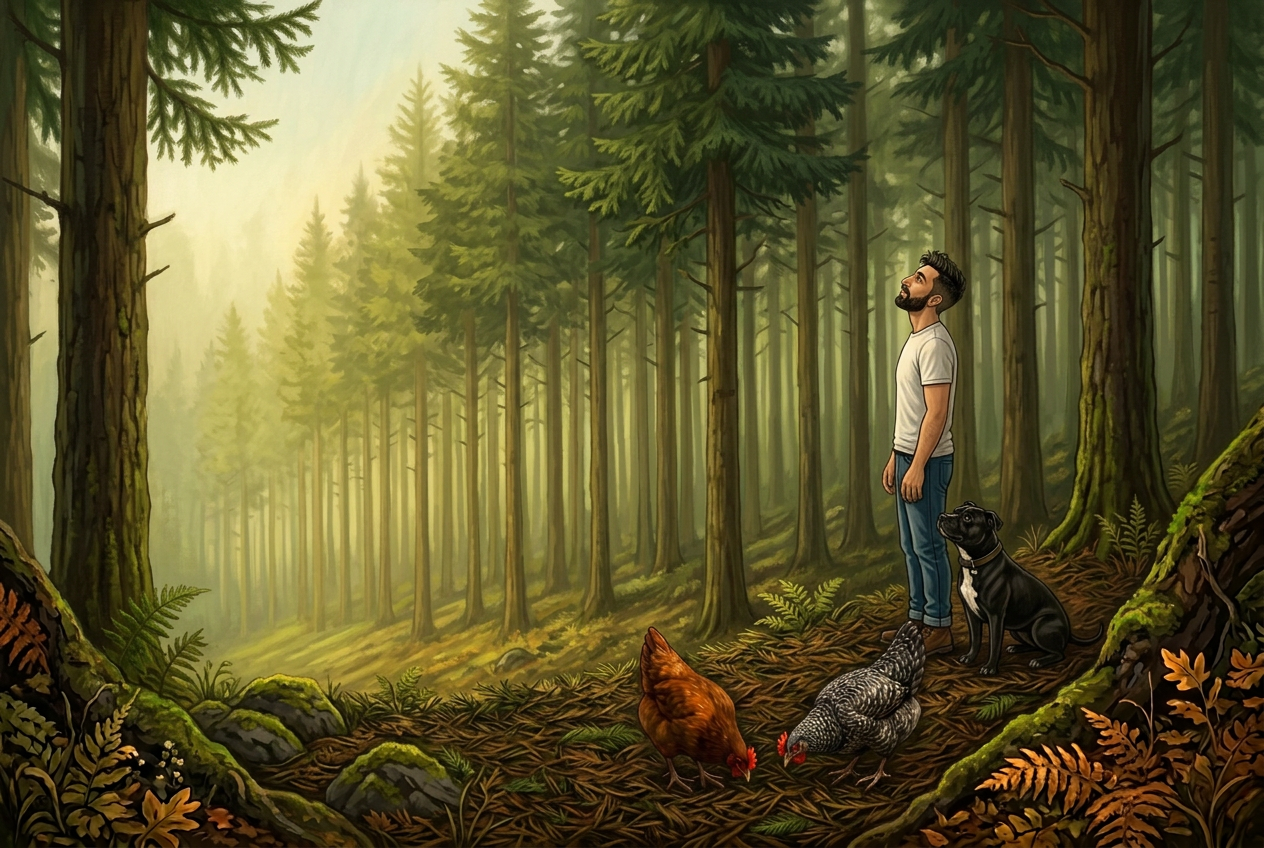
Sitka spruce comes from the wet, mild coastal strip of north-west America. Ireland, as it happens, is much the same: soft rain most of the year, no great cold, no long drought. A tree that evolved for that climate found itself very much at home.
It also grows on ground that defeats most other trees. Cold, wet, peaty upland that would never carry oak or beech will carry a Sitka crop. When Ireland set out to rebuild a forest estate from almost nothing in the last century, that mattered more than anything else.
No single species builds a forest estate. But Sitka bought Ireland the time to grow one.
What it produces
Sitka is the backbone of Irish timber. It is strong for its weight, it dries and machines well, and it is graded and used for house frames, roof trusses, joinery, pallets and panel products. Most timber-framed homes built in Ireland stand on it.
Timber is also the only structural material that is grown. It stores carbon while it stands and keeps storing it in a roof for a century. Every cubic metre of home-grown Sitka is a cubic metre of concrete, steel or imported timber not used.
Where it fits now
The conversation has moved on, and rightly. A landscape of nothing but Sitka is a poorer landscape. Modern planting mixes species, keeps open ground, protects watercourses, and puts native broadleaves along the edges and riparian zones where they belong.
But the answer is not to argue Sitka out of existence. It is to give it its right place: productive ground, well planned, well managed, alongside native woodland and mixed forest that do other jobs entirely.
One species cannot do everything. This one did a great deal, and it is not finished yet.