What the Wind Decides
In Ireland, wind is not a risk to be managed at the margins. It is the thing that ends most crops.
Why it happens
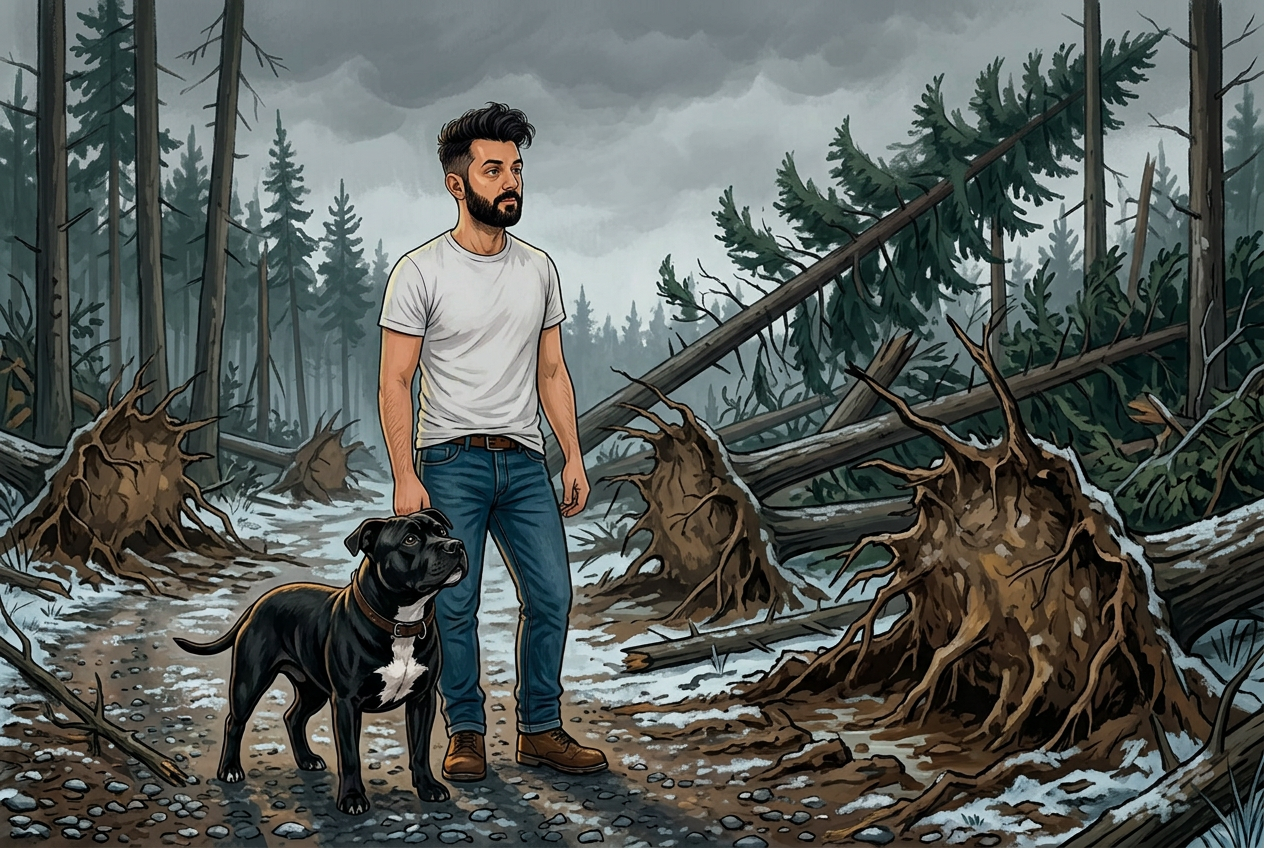
Shallow rooting on wet peaty soils, tall even-aged stands, and an Atlantic coast that delivers a named storm every few weeks. Once one tree goes over, the gap lets the wind in, and the damage spreads from the edge inwards.
You do not choose when a spruce crop ends. The wind does.
Thinning, and the risk of it
Thinning improves a crop, but the first year or two after a thinning is the most vulnerable a stand will ever be. On exposed sites foresters often decide not to thin at all, and simply grow a shorter, denser crop to a fixed date.
It is one of the genuinely difficult judgements in Irish forestry, and reasonable people disagree about it.
After a storm
Windblown timber is dangerous to clear and loses value quickly. Work is prioritised, safety comes before recovery, and some of the smaller pockets are simply left where they fell.
Those left pockets, awkward and untidy, become some of the best habitat in the forest within a few years.
Plan for a hundred years. Be ready for one Tuesday night in February.