The Year of an Acorn
Every native woodland in the country began in a bucket, a tray and a very ordinary shed.
Autumn: gathering
Seed collection is a good deal less romantic than it sounds. It is wet, it is usually October, and it involves standing under a tree with a sheet and a great deal of hope. Acorns are gathered from healthy, well-formed trees, because the shape of the parent tends to show up again in the child.
Good seed is local seed. A tree grown from acorns collected two fields away is already suited to the rain, the wind and the soil it will spend its life in.
A forest is mostly patience, kept in a tray until it is ready.
Winter: waiting
Most native seed needs cold before it will wake. Nurseries mimic what a hedgerow does for nothing: months of damp and chill, until something inside the seed decides that the danger has passed.
Nothing appears to be happening for a long time. This is normal, and it is the part most people skip when they imagine planting a wood.
Spring, and the years after
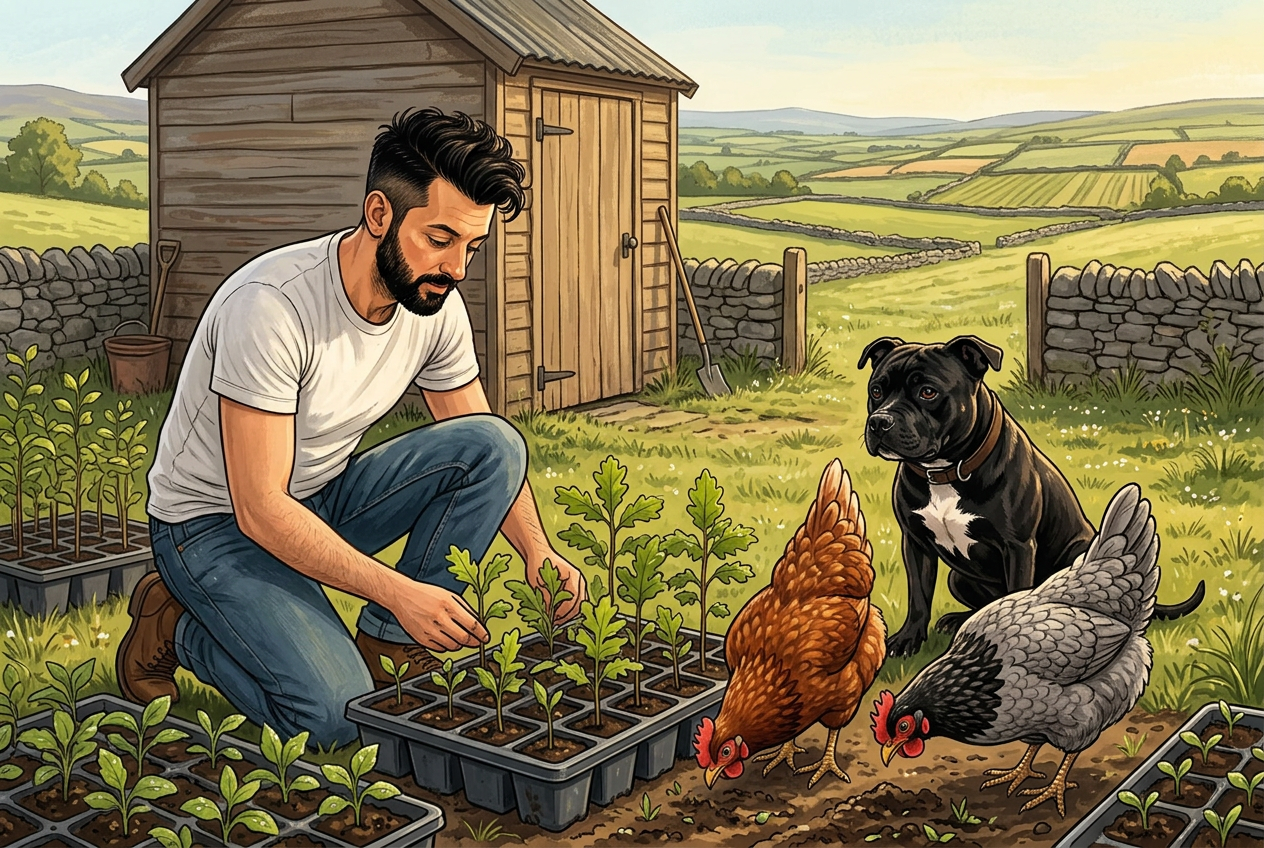
Then a green thing, no bigger than a spoon. Seedlings spend one or two years in the nursery being graded, lifted and hardened off before they are ever set out on a hillside. Half the skill of growing a forest happens before a single tree is in the ground.
By the time a seedling is planted it is already older than most people assume, and has been handled a dozen times by people who will never see it mature.
One good acorn, one wet autumn, and a hundred years of shade.