The Mark on the Bark
Long before a saw arrives, someone walks the whole stand with a tin of paint and makes several hundred small decisions.
Choosing
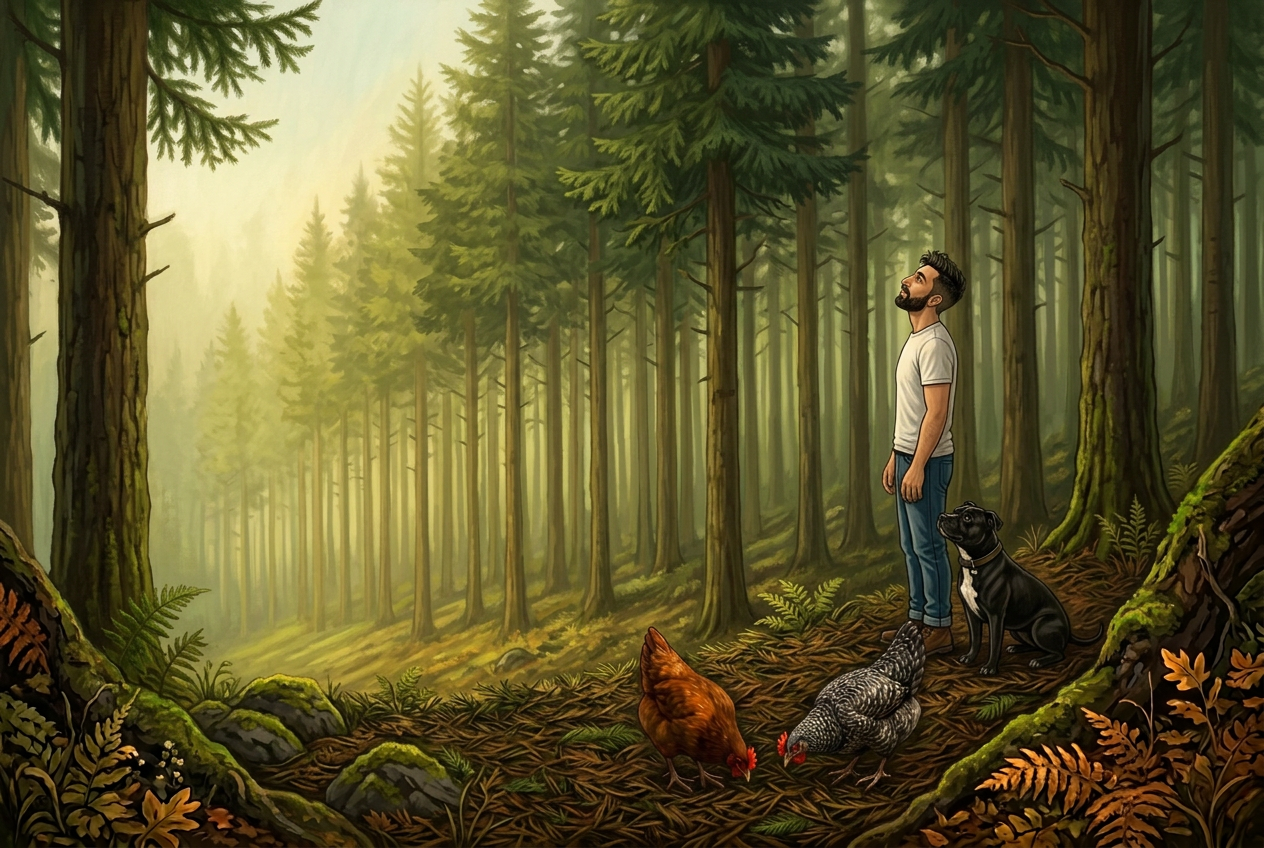
Tree marking is the quiet centre of good forestry. The marker walks the stand looking for the best stems — straight, healthy, well-crowned — and then works out which of their neighbours are holding them back.
The trees that come out are not the worst trees for their own sake. They come out to give the good ones room, light and time.
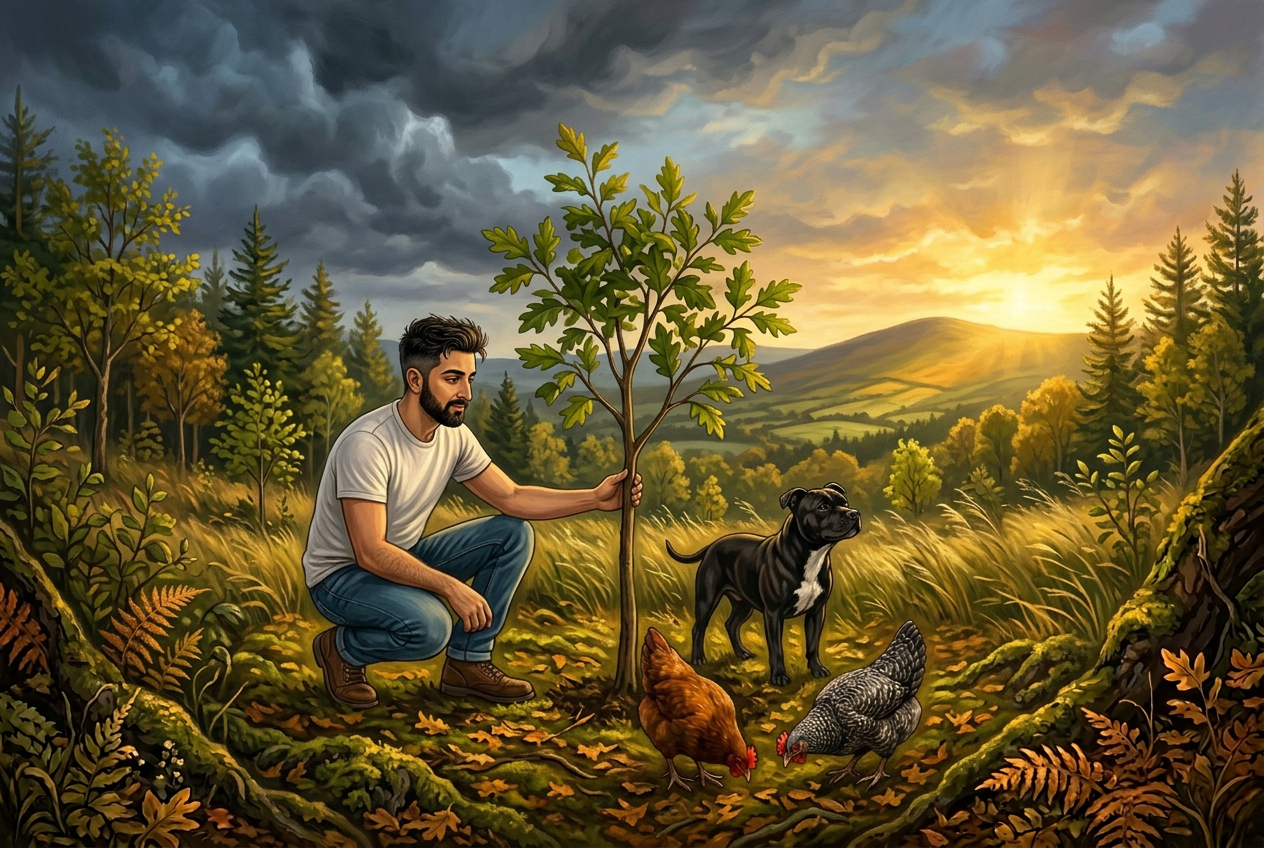
Thinning is not about which trees to take. It is about which trees to keep.
Taking
Harvesting is the loudest week the woodland will have. It is also, done properly, the most planned. Extraction routes are decided in advance, brash is laid down to protect the soil, watercourses are buffered, and work stops when the ground is too wet to carry a machine.
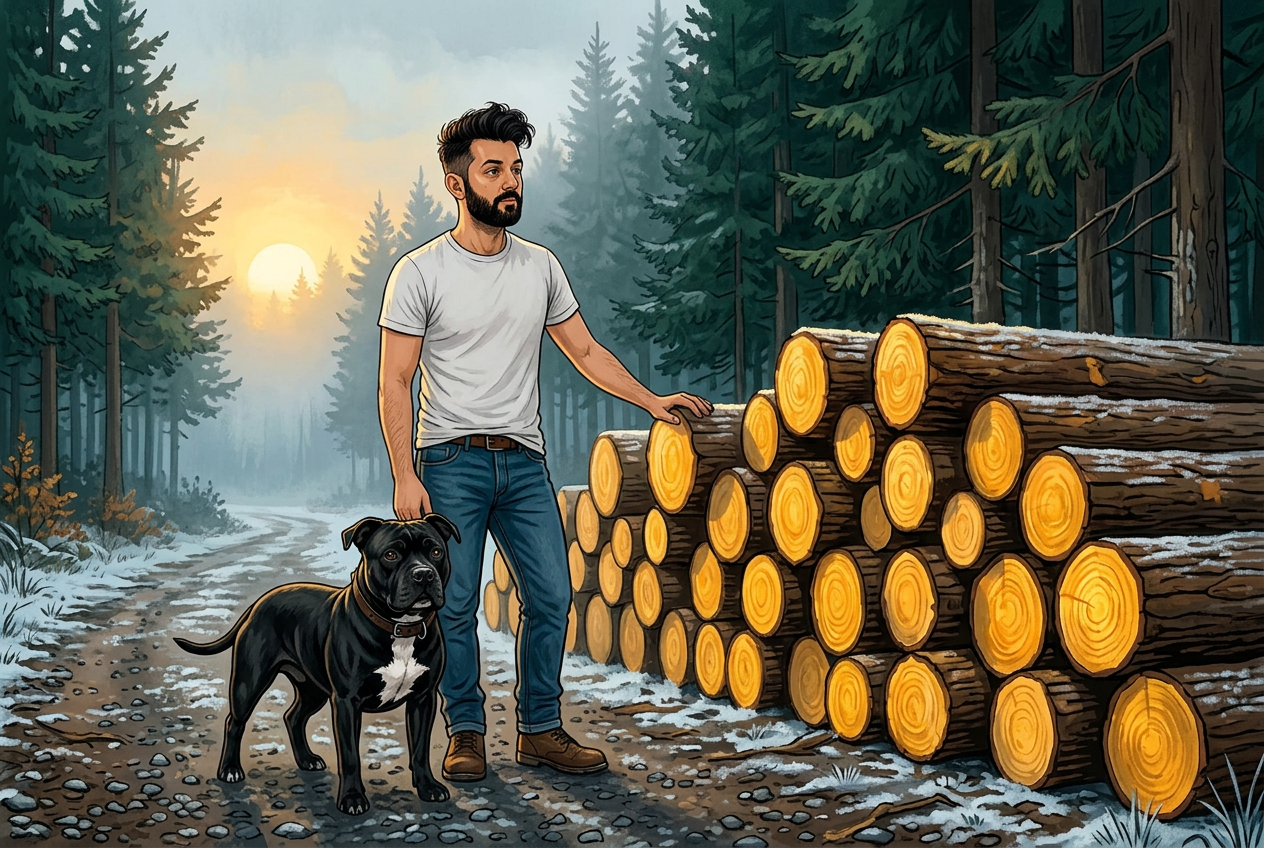
A well-run harvest looks almost dull afterwards: stacks at the roadside, a tidy floor, and the remaining trees unmarked.
Becoming something
From the stack, timber sorts itself by quality. The straightest goes for construction, the rest for boards, pallets, fencing, board products and fuel. Very little is wasted, and the carbon in a roof beam stays there for as long as the roof stands.
It is worth remembering when you next look at a floor or a rafter. Somebody chose that tree, on a wet morning, years ago.
A stack of logs is the end of one long decision and the start of another.