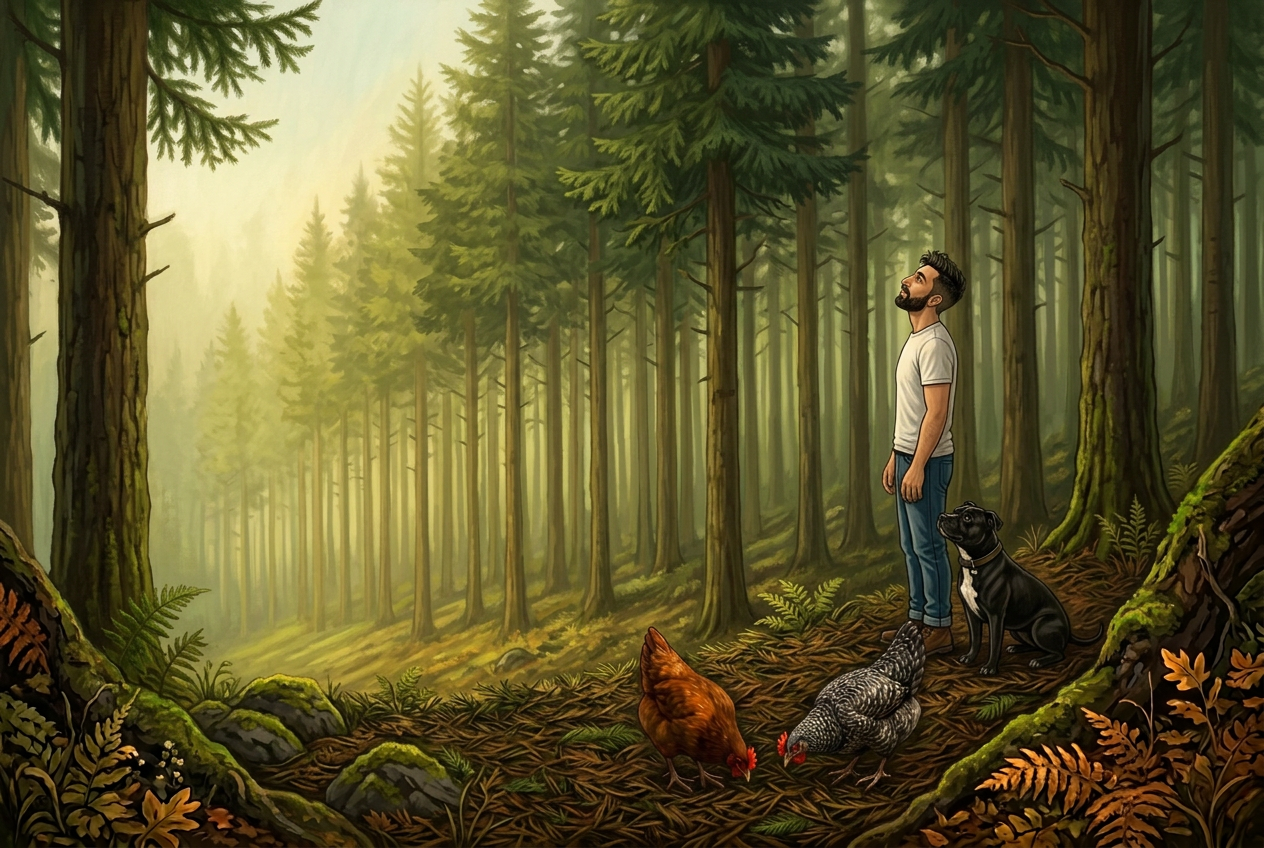
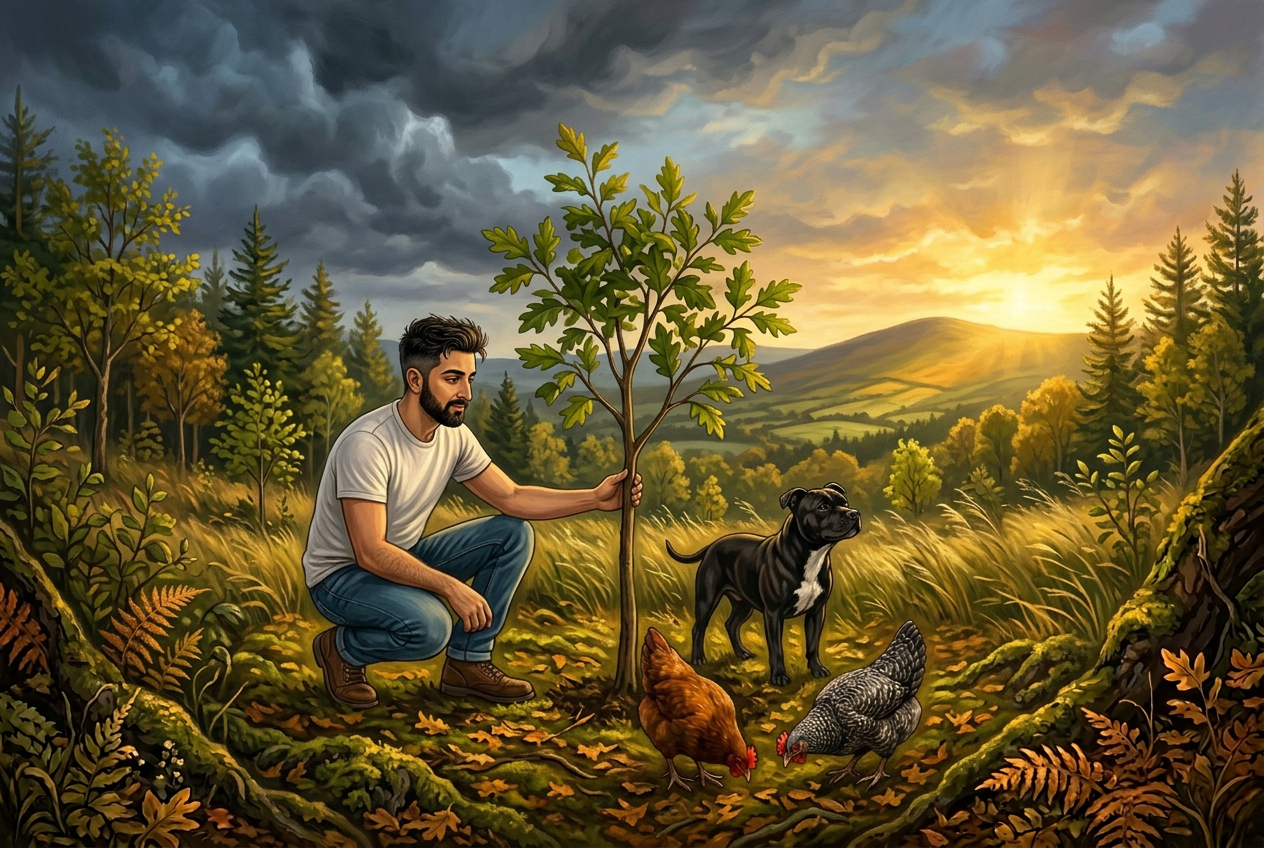
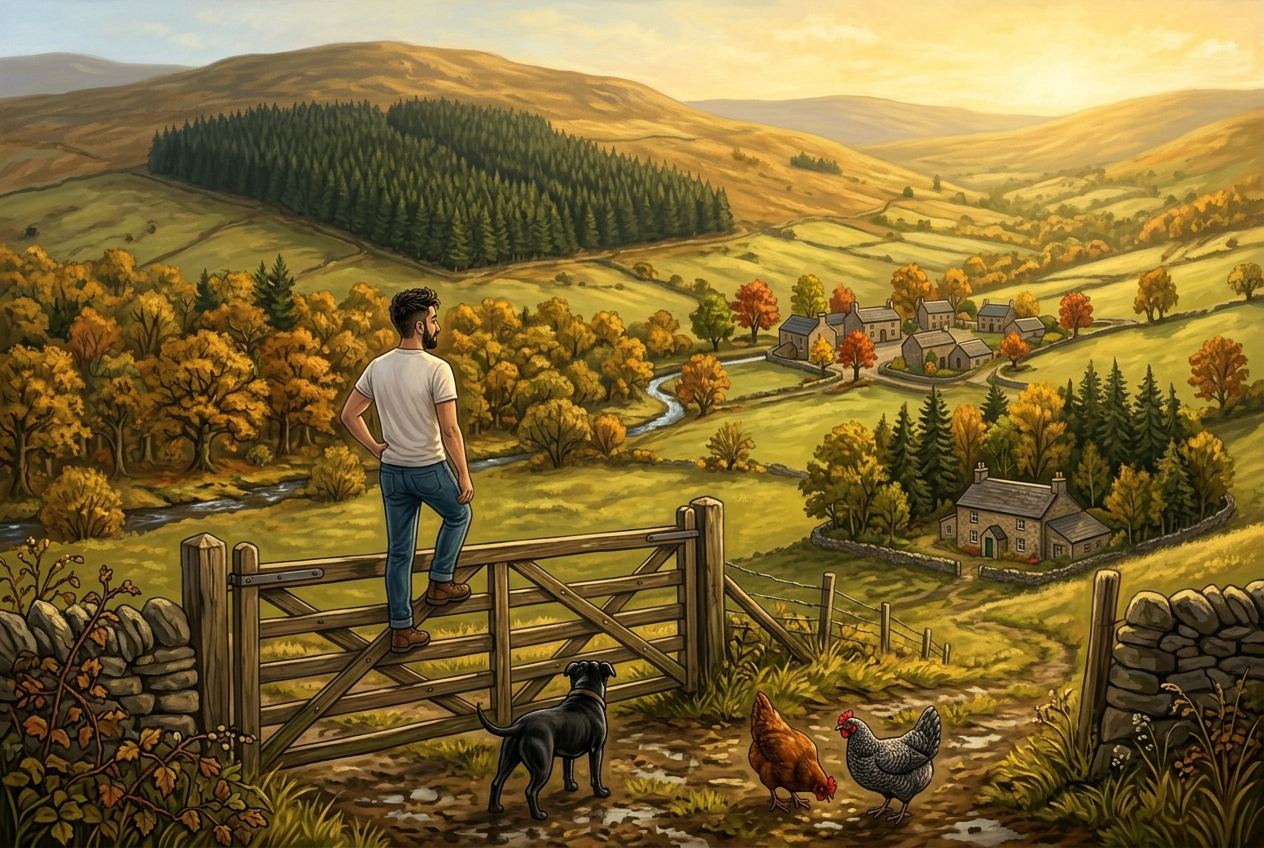
The Future Forest
Forests for the Future, Episode 5. Climate resilience, pests and disease, drought, storms, species selection, natural regeneration, adaptive management.
The pressures
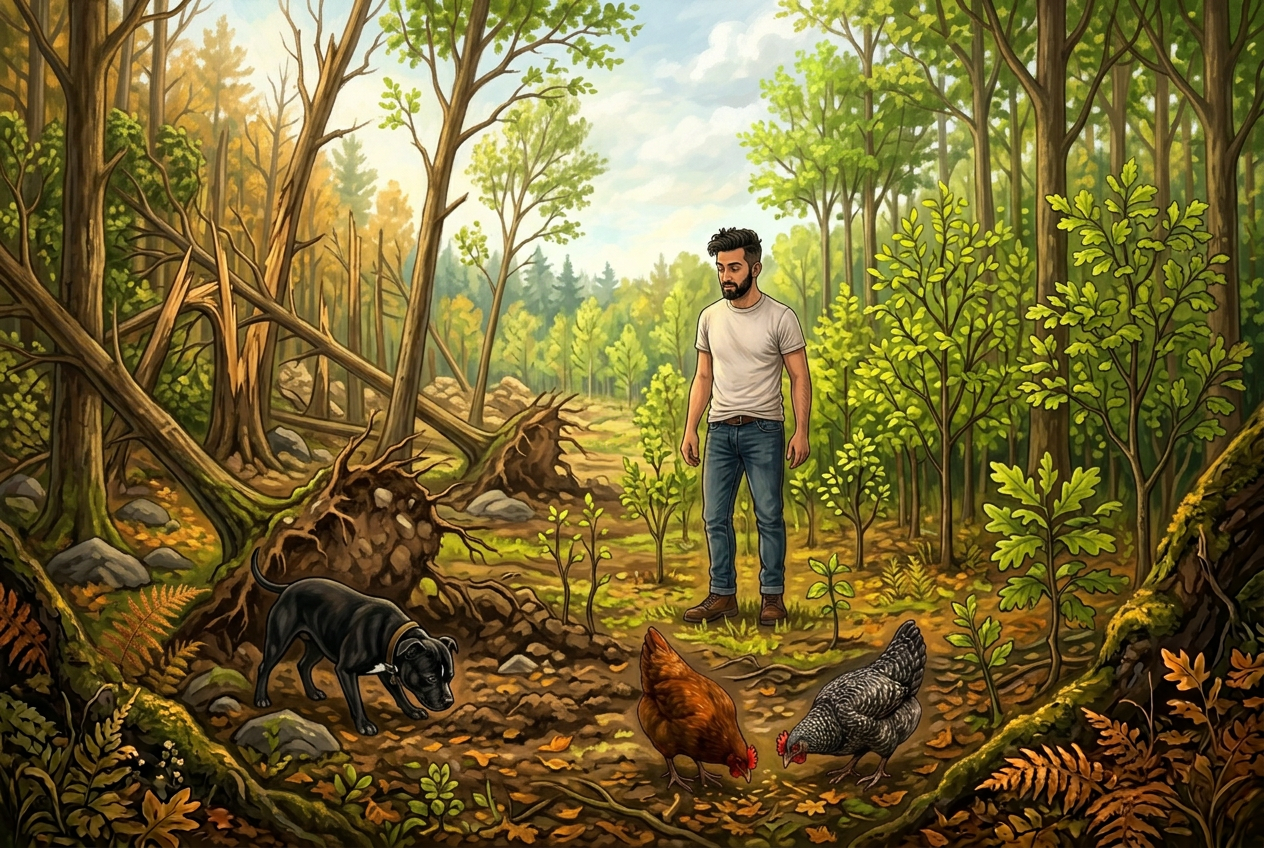
Storms take the tallest and the most exposed, usually in the wettest month, usually on shallow soils. Drought takes the young and the shallow-rooted in a dry August. Pests and diseases take whatever species is planted most widely and most uniformly.
These pressures are not new. What has changed is how often they arrive, and how many of them arrive together.
A resilient forest is not one that never suffers. It is one that recovers without help.
What actually helps
Species selection matched to the site rather than to habit. Thinning early, so stems have room and root before the wind finds them. Keeping soils intact, because rooting depth decides who is still standing after a storm.
Natural regeneration is worth more than it is usually given credit for. Seedlings that come up on their own are already suited to that exact ground, and they arrive with no planting cost and no transport shock.
Adaptive management
The old model was to plant a crop, walk away, and come back to harvest it. The newer approach is to keep looking: monitor, thin, respond, and change the plan when the forest says the plan was wrong.
That takes better records than a notebook in a wet pocket, which is where digital management tools have quietly become useful. Platforms like MyForestPass exist so that what was observed in the wood in 2026 is still on file when a decision is being made in 2050.
The future forest will not be the one planned. It will be the one paid attention to.