The First Three Summers
Planting a tree takes about a minute. Keeping it alive takes three years of walking back to look at it.
The first summer
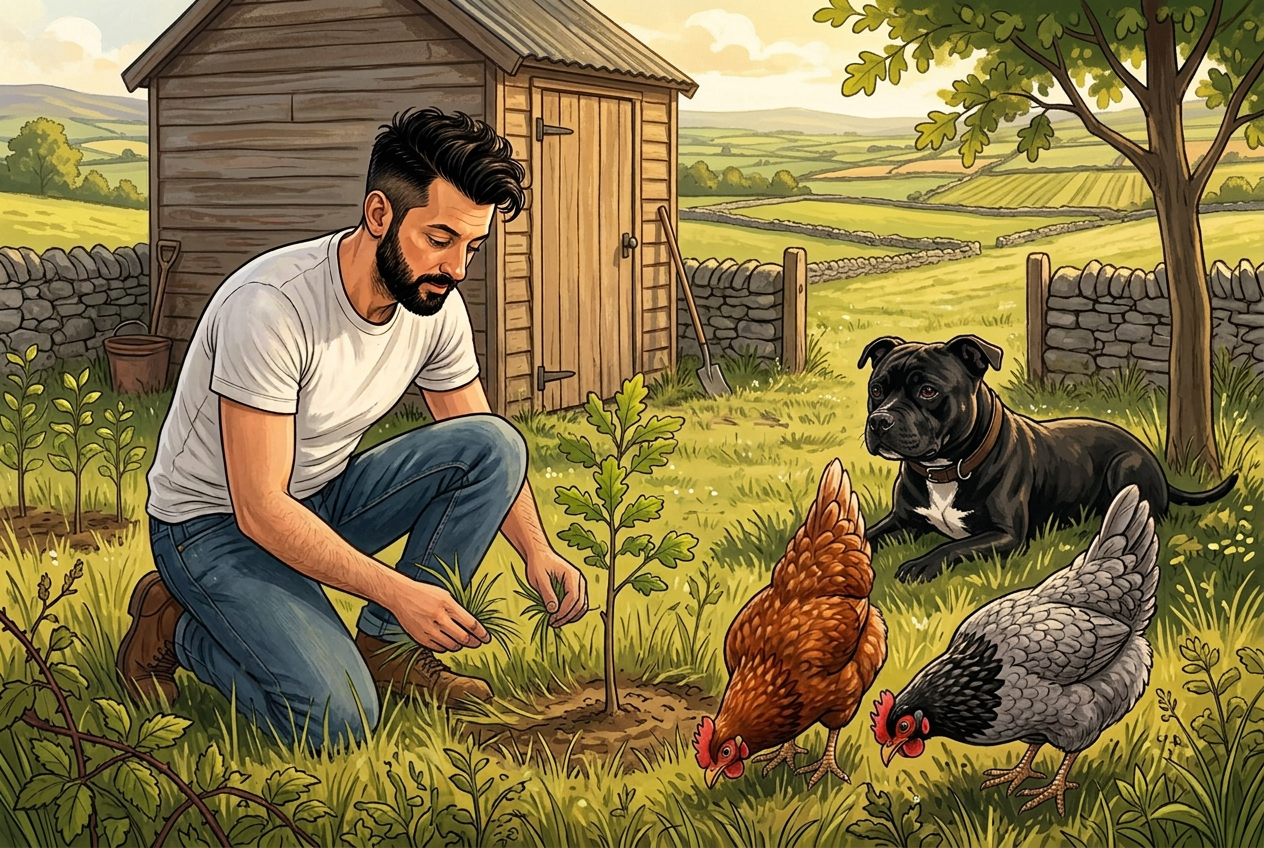
A newly planted seedling has almost no root system left. It was lifted from a nursery bed in winter, carried in a bag, and pushed into a slot in the ground. Everything it does in its first summer is an attempt to reconnect with the soil.
This is why planting is done while trees are dormant and why the roots are never allowed to dry out on the way. A bag left open in the sun for twenty minutes can undo a whole day's work.
Most trees that fail do not die of anything dramatic. They are simply forgotten.
Competition, not neglect
The main enemy of a young tree is grass. Rank vegetation takes the water first, smothers the leader, and gives cover to voles that ring-bark stems over winter. Keeping a clear patch around each tree for the first two or three seasons matters more than almost anything else.
The other threat is browsing. Deer, hares and rabbits will all take a fresh shoot, and they take the growing tip first. Guards, fencing or simply planting more than you need are the usual answers.
Beating up
Some trees always fail. The following spring, the gaps are counted and replanted — beating up, as it is called, though nobody can say why. A ten per cent loss is ordinary. Anything much higher means the site is telling you something about drainage, exposure or species choice.
By the third summer the survivors are above the grass and away. The work stops looking like gardening and starts looking like a wood.
Three summers of small attention, and then a hundred years of none.