Seeds of Tomorrow
Forests for the Future, Episode 8. Where forest seed comes from: collection, seed orchards, genetic diversity, and growing resilient forests for future generations.
Collection
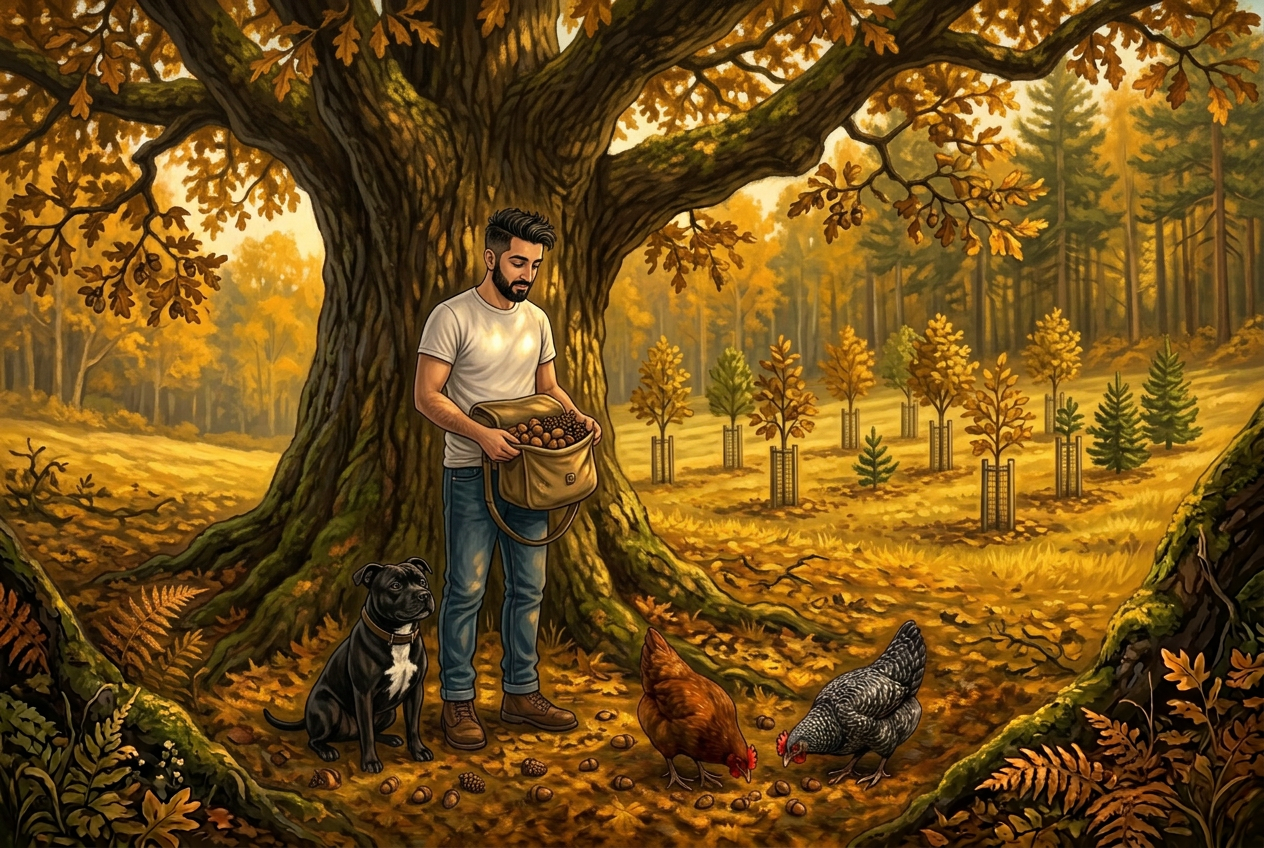
Seed is gathered in autumn, in a narrow window, from trees chosen for form, health and how well they suit the region. Cones are picked before they open. Acorns are gathered off the ground, and the good ones sink in water.
Where the seed came from is recorded, because provenance decides how the tree will behave. Seed from a warm dry region may cope better with future summers, or may flush too early and be caught by frost.
Every forest in Ireland began as a handful of seed somebody bothered to collect properly.
Seed orchards
A seed orchard is a small planted stand of selected parent trees, grown to produce seed rather than timber. Over decades this improves growth, form and disease resistance in the trees that follow.
It is careful, patient breeding. The improvement in each generation is modest. Across several generations it is considerable.
Keeping the gene pool wide
There is a limit to how narrow selection should be allowed to go. A stand of nearly identical trees is efficient right up until something arrives that all of them are equally vulnerable to.
Good practice keeps a broad genetic base: many parent trees, several provenances, and some seed kept from stands that are not the neatest but have simply survived a long time where they stand.
An acorn in a canvas bag is a decision about the year 2160.