Regeneration
Forests for the Future, Episode 7. How forests renew themselves: natural regeneration, planting, seedlings, nurseries, and protecting the next generation of forest.
Natural regeneration
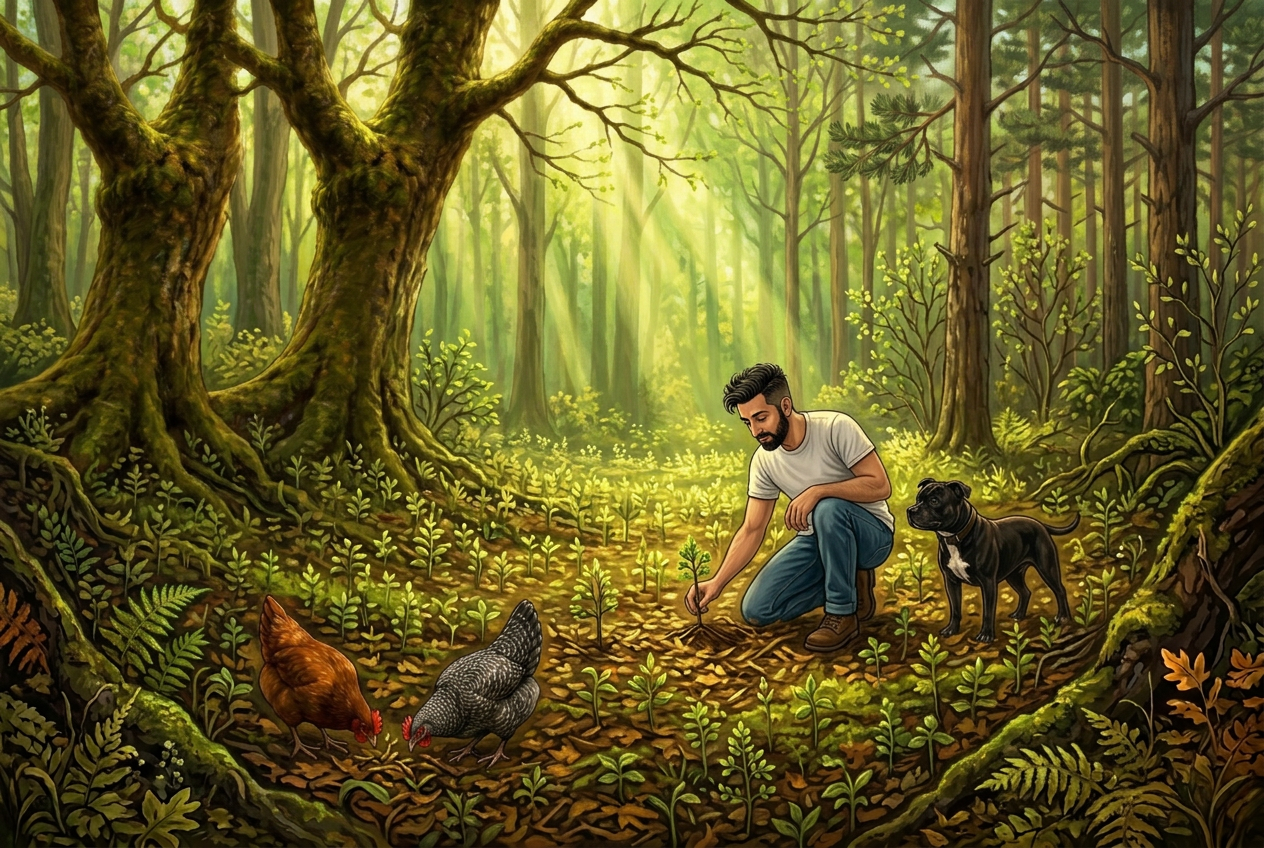
Open a gap in the canopy and seed already lying in the soil, or arriving on the wind and in birds, begins to grow. Within three years a bare patch of forest floor can be a thicket of seedlings.
Regeneration that comes up on its own is well adapted to that exact site, costs almost nothing, and has never had its roots disturbed. Where it works, it is the best planting stock available.
Given light, a wood will try to replace itself. Most of the work is deciding what to protect.
Planting
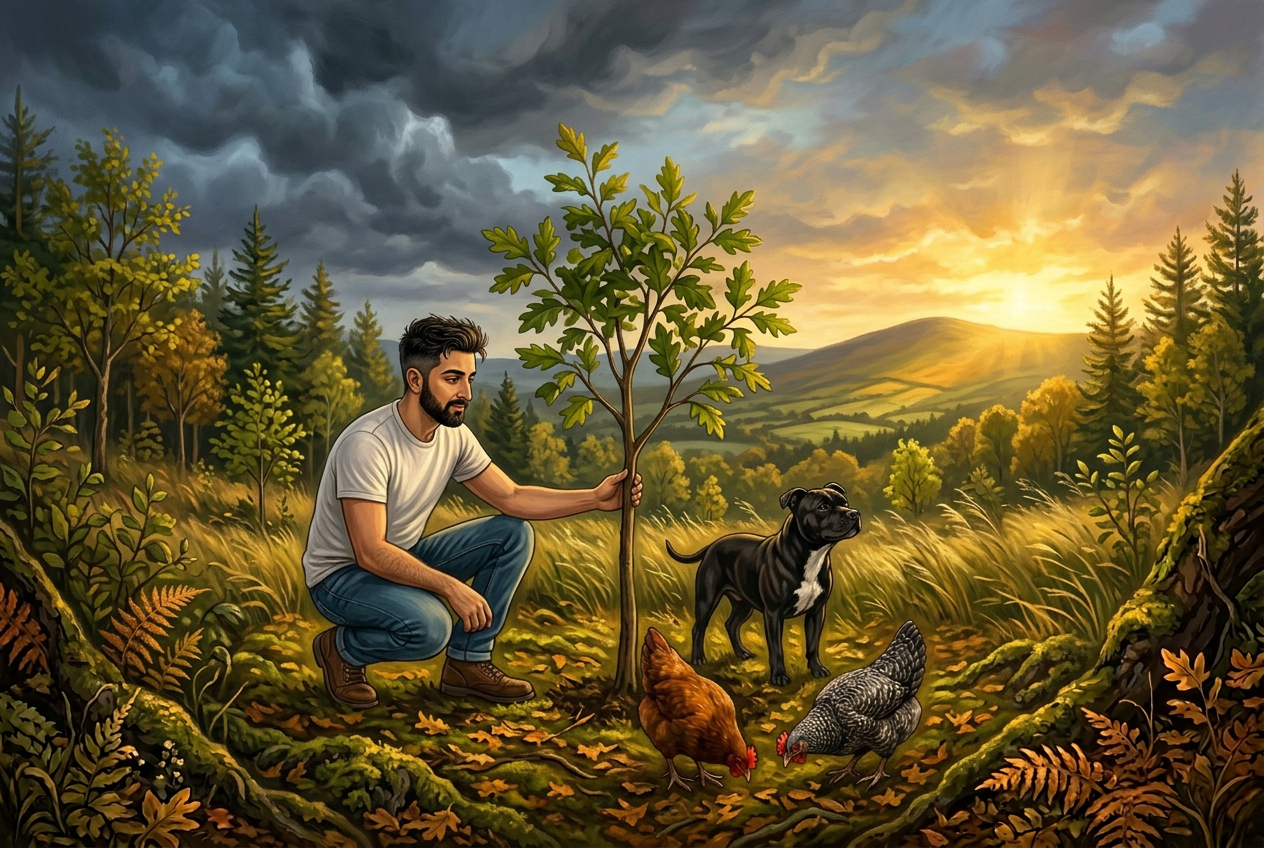
It does not always work. Heavy grass, dense bramble, deer, or simply no seed source nearby will leave a gap empty for years. Then trees are planted, and the species can be chosen deliberately rather than accepted.
Nursery seedlings arrive as small bare-root or cell-grown plants, best put in while dormant, in ground prepared enough to give them a start and no more.
Protecting what comes next
The first three years decide everything. Weeds compete for water. Deer and hares browse the leading shoot. Frost lifts new roots out of the ground.
So there are guards, and fencing, and cleaning around the stems, and walking the ground to see what is actually happening. It is small, repetitive work, and it is the difference between a plantation and a field of sticks.
The next forest is already here. It is ankle-high and easy to stand on.