From Horses to Harvesters
Walk through an Irish forest today and you might hear the quiet footsteps of a horse, or the powerful hum of a modern harvester.
Working horses
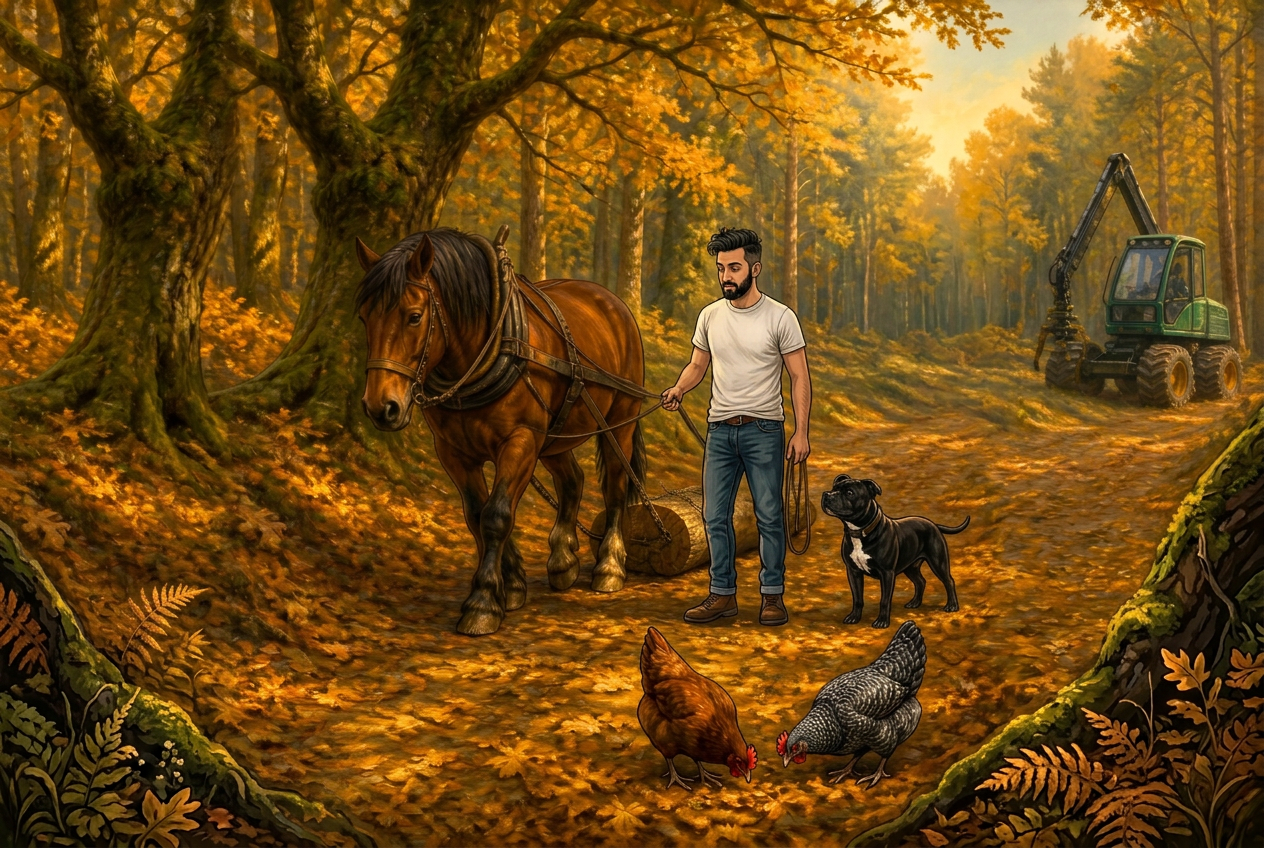
In sensitive woodlands, on steep ground, or wherever protecting the soil and young trees matters most, horses are still used to extract timber. They move quietly, they can work around standing trees that a machine would have to avoid, and they leave surprisingly little behind.
A good horse can pull a log to the roadside with a precision that looks almost idle. There is no rutted ground, no crushed saplings, no fuel spill on the brash. Sometimes the oldest methods remain among the most effective.
Technology changes. Good forestry principles endure.
Modern harvesters
In larger or commercial forests, specialised harvesters and forwarders do the same job on a different scale. They cut, de-limb and measure timber in a single pass, then carry it to the roadside in a way that keeps operators out of the most dangerous ground.
Modern machines improve productivity, safety, and the ability to plan extraction routes before any wheel turns. When the work is matched to the site, the disturbance is not necessarily greater — it is simply faster. The detailed records they produce also feed the management platforms, like MyForestPass, that keep the paperwork honest.
One goal
Although the methods look very different, they share the same purpose. To manage forests responsibly. To protect future forests. To produce sustainable timber. To care for wildlife. To leave healthy forests for the generations that follow.
Technology changes. Good forestry principles endure.
Different tools, same intention: the forest left in good heart.