Everything Happens in the Soil
Half of a forest is underground, and it is the half that decides what the other half can do.
Reading the ground
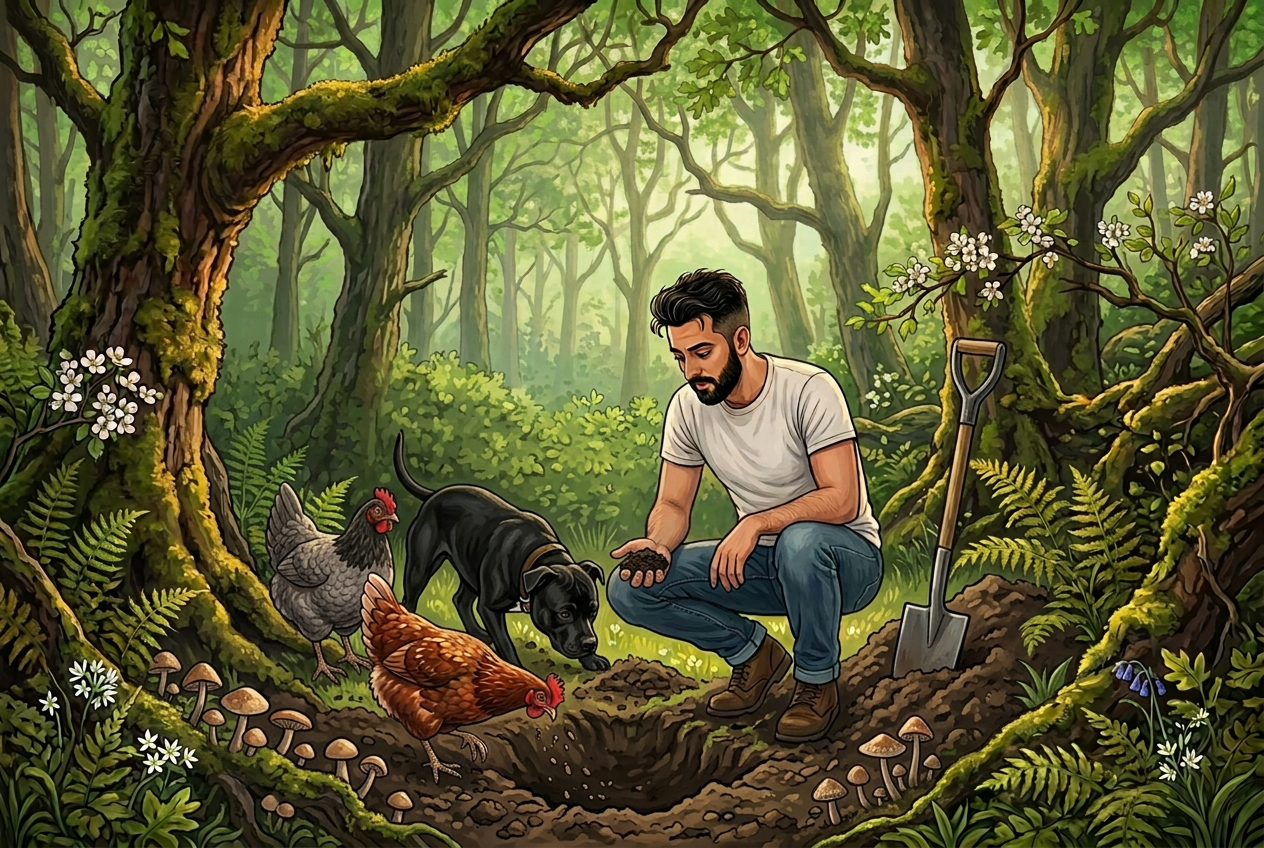
Before anything is planted, someone digs a hole. Depth, texture, the colour of the subsoil, how quickly water sits in the bottom of the pit. Grey mottling means the ground is waterlogged for part of the year, and that rules out a good many species immediately.
The plants already growing there say as much as the soil pit. Rushes mean wet. Bracken means dry and free-draining. Nettles mean somebody's cattle stood here for years.
Species choice is really a soil decision wearing a different name.
The fungal half
Nearly every forest tree lives in partnership with fungi wrapped around or inside its roots. The fungi gather water and nutrients from a far greater volume of soil than the roots could reach, and take sugars in return.
This is one reason bare-rooted native stock often establishes better in soil that has held trees before. The network is already there, waiting.
Not damaging it
Most avoidable harm in forestry is soil harm: rutting from machines on wet ground, compaction along extraction routes, silt washing into a stream after cultivation. It is invisible within a season and lasts for decades.
Brash mats, fixed routes and stopping work when the ground is too soft are not fussiness. They are the cheapest form of long-term maintenance there is.
Look after the soil and the trees mostly look after themselves.