Agroforestry
Forests for the Future, Episode 6. Where farming and forestry work together: shelter, livestock, soils, water, carbon, food and biodiversity. One landscape, multiple benefits.
Shelter and stock
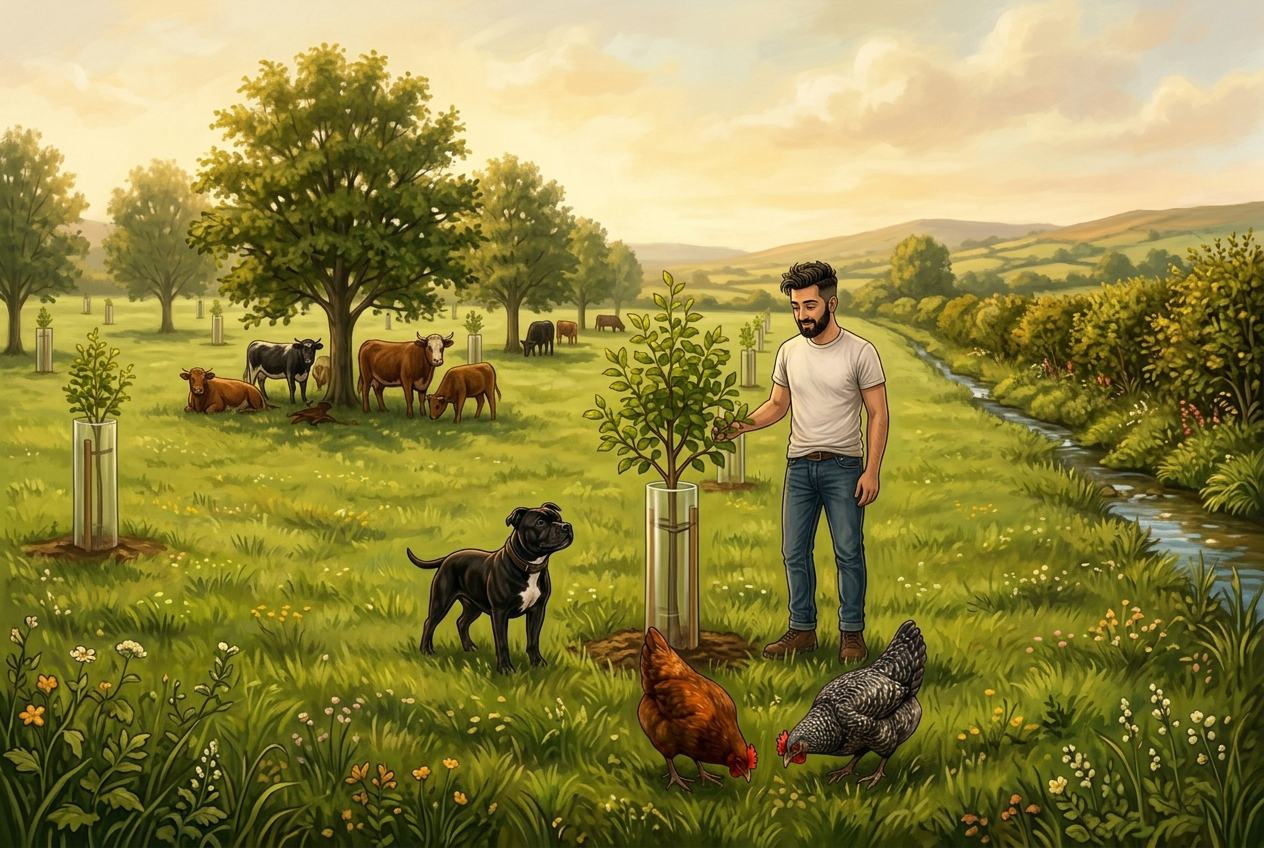
Cattle standing under a tree on a hot day are not idling. Shelter reduces heat stress in summer and wind chill in winter, and stock that are not fighting the weather convert feed better.
A shelterbelt across an exposed field can lift grass growth downwind of it. Farmers who have planted one rarely take it out again.
Agroforestry is not a compromise between farming and forestry. It is what most farms used to look like.
Soil, water and carbon
Tree roots go deeper than grass roots. They hold banks, slow runoff after heavy rain, lift nutrients from below the grazing layer and build organic matter where the leaves fall.
Along a stream, a line of trees is the cheapest water protection there is: shade to keep temperatures down for fish, roots to hold the bank, and a buffer between the field and the water.
One landscape, several yields
Silvopasture puts trees over grazing. Hedgerow and riparian planting works the field margins. Fruit and nut trees add food to the same acre that is already producing something else.
The land does not have to be either farmed or forested. Much of the most useful ground does both, and does them better together than apart.
The trees in the ditch were never in the way. They were part of the farm.